When starting the building or renovation process, choosing the right materials is one of the most important long-term decisions a building or business owner can make. High-traffic areas, such as entrances, lobbies, hallways, restrooms, waiting areas, and retail floors are exposed to constant daily wear and tear.
Selecting the wrong materials for these spaces can quickly lead fading, scratches, stains, expensive repair or replacement costs, and even a worn-out look that impacts customer and client perception.
But there is good news: today’s commercial-grade materials combine durability, style, and low maintenance to help businesses create spaces that look professional and lower operating costs at the same time.
Table of Contents
Why Durable Materials Matter in Commercial Spaces
Key Considerations Before Choosing Materials
Traffic Levels
Maintenance Requirements
Brand Image and Design
Best Flooring Materials for High-Traffic Areas
Luxury Vinyl Tile (LVT)
Porcelain Tile
Polished Concrete
Commercial Carpet Tile
Durable Wall Materials for Commercial Interiors
High-Performance Commercial Paint
Decorative Wall Panels
Stone and Tile Accent Walls
Best Countertop Materials for Commercial Use
Quartz
Solid Surface Countertops
Sustainable Material Options for Commercial Spaces
Common Mistakes Business Owners Should Avoid
Choosing Residential-Grade Materials
Focusing Only on Upfront Cost
Ignoring Maintenance Needs
How Durable Materials Improve ROI
Final Thoughts
Why Durable Materials Matter in Commercial Spaces
Your physical space is a tangible representation for how your customers, clients, and even your employees view your business. Things like damaged flooring, scuffed walls, or worn-out finishes can make even the most successful and well-run business appear outdate – or worse – neglected. That neglect may even carry over into the viewer’s perception of how they will be treated when interacting with your business.
Investing in durable commercial materials for your most high-traffic areas helps business owners:
– Reduce maintenance and replacement costs
– Minimize downtime caused by repairs
– Improve customer experience
– Maintain a professional appearance
– Increase property value
– Create safer environments for employees and visitors
While the premium maters we discuss here may cost a little more upfront, they often save money over time due to lower maintenance and longer times between replacements.
Key Considerations Before Choosing Materials
Before selecting your flooring, wall finishes, countertops, and other materials for your high-traffic areas, you’ll need to evaluate how each space actually functions. Things to consider include:
Traffic Levels
Not all commercial areas have the same needs. For example:
– Retail stores typically see higher foot traffic
– Restaurants face spills, moisture, and heavy cleaning
– Medical offices require hygienic, easy-to-sanitize surfaces
– Office buildings need materials that balance durability and aesthetics

Maintenance Requirements
No matter your business, choosing materials that are easy to clean and maintain is essential. Look for surfaces that are:
– Scratch-resistant
– Stain-resistant
– Moisture-resistant
– Easy to sanitize
– Compatible with commercial cleaning products
Low maintenance materials can significantly reduce operational costs (time and money spent on cleaning and replacement) over time.
Brand Image and Design
The materials you choose should be practical, but also support your brand identity. Company colors and logos may be part of the equation, but also consider:
– Polished concrete and glass in modern offices
– Stone or porcelain finishes in luxury retail spaces
– Warm, welcoming colors and textures in restaurants
– Hygiene and durability-focused materials for healthcare facilities
The ultimate goal: combine aesthetics with long-term performance no matter what type of business occupies the space.
Best Flooring Materials for High-Traffic Areas
Flooring is likely the first thing you think of when you hear the term “high traffic area.” That’s with good reason – it’s often the most heavily-used surface in any commercial property. Choosing the right flooring can dramatically improve durability and maintenance efficiency in key zones.
Luxury Vinyl Tile (LVT)
Luxury Vinyl Tile (LVT) is one oof the most popular commercial flooring options. The benefits of LVT include:
– Affordable (lower installation cost than natural materials)
– Flexible (can be used in many different spaces)
– Scratch-resistant
– Water-resistant
– Easy to clean
– Comfortable underfoot
– Available in wood and stone looks for an upscale look
LVT works well in many spaces, including:
– Retail stores
– Offices
– Restaurants
– Medical facilities
– Waiting rooms
Porcelain Tile
Choose porcelain tile for a material that combines a premium look with high durability. Some advantages of porcelain tile are:
– Extreme durability (long lifespan)
– Moisture-resistant
– Stain-resistant
– Minimal maintenance
– Excellent at handling heavy foot traffic
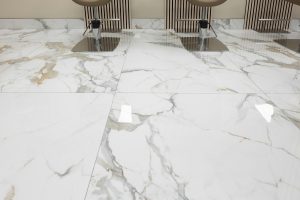
Porcelain tiles are a great fit for areas like:
– Restaurant entrances
– Hotel lobbies
– Commercial restrooms
– Retail entryways
Choose textured porcelain tile to improve slip-resistance in wet areas.
Polished Concrete
Polished concrete has become increasingly popular in modern commercial construction due to its impressive durability combined with an industrial appearance fit for many businesses. Some reasons to choose polished concrete:
– Extremely long lifespan
– Low maintenance
– Resistant to heavy traffic
– Sustainable
– Modern aesthetic
Polished concrete is ideal for space like:
– Warehouses
– Showrooms
– Coffee shops/cafes
– Industrial-style offices
– Retail environments
Commercial Carpet Tile
Carpet tile is a unique choice that provides comfort, sound reduction, and durability for your office environment. Some of the many benefits include:
– Easy replacement (can limit to damaged sections)
– Noise reduction
– Comfortable underfoot
– Variety of colors/patterns
The best places to use carpet tiles are:
– Offices
– Conference rooms
– Coworking spaces
– Waiting areas
Pro tip: solution-dyed fibers offer the best stain resistance and longevity
Durable Wall Materials for Commercial Interiors
Believe it or not, your walls are susceptible to much of the same damage as flooring, including scuffs, scratches, dents, and stains – especially in busy customer-facing environments. Keep damage and wear and tear at bay by choosing the following more durable wall materials:
High-Performance Commercial Paint
Commercial-grade paint provides significantly better durability than the residential products you find in many hardware and home improvement stores. Instead, look for commercial-grade paint with features including:
– Washable finish
– Scuff-resistant coating
– Antimicrobial properties
– Satin or semi-gloss finish

Such finishes are especially useful for:
– Restaurants
– Healthcare facilities
– Retail stores
– Hallways and corridors
Decorative Wall Panels
Wall protection panels combine durability and modern design that look beautiful and unique. Popular options include:
– PVC wall panels
– Wood veneer panels
– Decorative laminate systems
– Fiberglass reinforced panels (FRP)
These wall treatments are typically used in:
– Hospitality spaces
– Medical facilities
– Commercial kitchens
– Retail interiors
Stone and Tile Accent Walls
Stone veneer, along with porcelain wall tiles create a premium appearance while also offering exceptional durability and a beautiful focal point. Use them in:
– Reception areas
– Retail feature walls
– Restaurant interiors
– Hotel lobbies
Pro tip: Porcelain alternatives often provide easier maintenance than natural stone
Best Countertop Materials for Commercial Use
Commercial countertops take a beating throughout the day. They must endure spills, cleaning, and heavy daily use. Some excellent choices for your countertops include:
Quartz
Quartz remains one of the best commercial countertop options on the market for a number of reasons, including:
– Non-porous surface
– Stain-resistant
– Scratch-resistant
– Easy to sanitize
– Consistent appearance
– Low maintenance

Quartz is an ideal choice for:
– Reception desks
– Restaurant counters
– Break rooms
– Medical offices
Solid Surface Countertops
Solid surface materials are known for their high durability and other benefits like:
– Seamless installation
– Excellent repairability
– Easy to clean
– Seamless appearance
– Renewable surfaces
– Hygienic properties
Solid surface countertops are often used in:
– Healthcare facilities
– Offices
– Hospitality spaces
Sustainable Material Options for Commercial Spaces
The building and construction industry is responsible for the a large part of the world’s carbon emissions and pollution. Over the years, the industry has moved toward more sustainable building practices and materials. As a business owner, you can contribute toward this by prioritizing Eco-friendly materials in your next construction or renovation project.
Some of the most popular sustainable options today include:
– Recycled-content carpet tile
– Low-VOC paints and adhesives
– FSC-certified wood
– Polished concrete
– Recycled rubber flooring
Pro tip: Sustainable materials can support LEED and WELL certification goals and demonstrate environmental responsibility to customers and clients
Common Mistakes Business Owners Should Avoid
There are a number of missteps that can occur when choosing materials, whether it’s to save time, money, or just not knowing where to start, making sure you avoid these pitfalls will give you a beautiful, functional, durable space you can be proud of for years to come.
Choosing Residential-Grade Materials
Residential products are not designed or tested for heavy commercial traffic. They often wear out quickly, as they do not stand up to the tests of high foot traffic or continuous heavy daily use.
Focusing Only on Upfront Cost
Premium, high-durability materials may cost more upfront, but business owners must consider long-term performance and cost as well. Cheaper materials may save the bottom line in the beginning, but could also require frequent replacement or maintenance – significantly increasing long-term costs.
Ignoring Maintenance Needs
Be careful when choosing materials. High-end expense does not always equal durability. The material may look beautiful upon installation, but some require intensive, continual maintenance that may not fit your operational budget.
How Durable Materials Improve ROI
Durable commercial materials deliver value beyond aesthetics and longer time between repairs or replacements. Long-lasting materials and finishes help:
– Reduce repair expenses
– Lower maintenance labor costs
– Improve customer/client perception
– Extend renovation cycles
– Protect brand image
– Increase property resale value

In many cases, a little extra upfront investment in more durable materials results in substantial savings over the life the property.
Final Thoughts
Selecting durable materials for high-traffic commercial spaces is about more than appearance. Choosing the right materials helps businesses create professional, welcoming environments for customer, clients, and employees alike while minimizing maintenance and other long-term expenses.
Whether you’re building new, renovating, or updating and modernizing, choosing durable, commercial-grade flooring, wall finishes, and other surfaces can dramatically improve durability, functionality, and customer and employee experience.
The staff at Realty Asset Advisors knows that by balancing aesthetics, performance, and maintenance requirements, business owners can create spaces that look great and perform well for years to come.
Contact us today!